Time Team's Dream Sites
In an exclusive interview, some of Time Team’s favourite personalities share their dream archaeological sites.
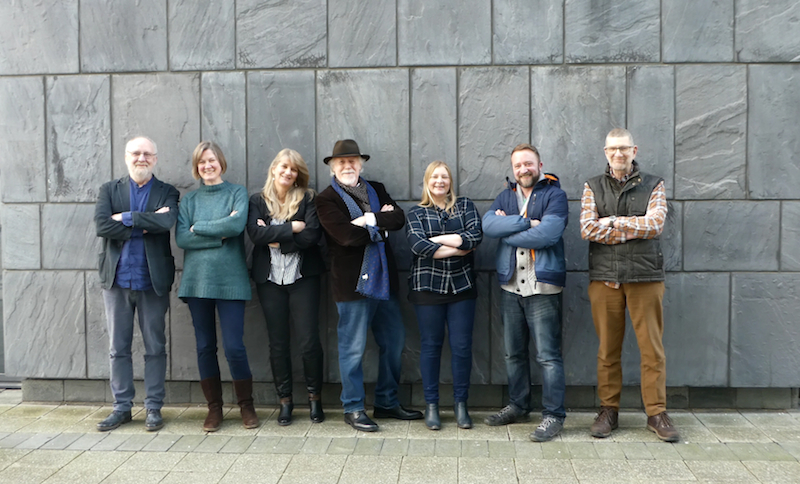
At the beginning of March, we brought several Time Team experts together to answer your questions. The show's creator and series producer, Tim Taylor, caught up with archaeologists Helen Geake, Carenza Lewis, Dani Wootton, John Gater and Stewart Ainsworth and producer Jim Mower. Watch this space for our exclusive video, coming soon. In meantime, we have a few highlights, just for you.
To get things started, we asked the team: if you could magically get permission to dig any historical site in the world, which would you choose? Here's what they had to say...
Stewart Ainsworth: “It would be in France, the Field of Cloth of Gold, which most people would have heard of with Henry VIII. We made a documentary with Time Team, actually, and we were looking potentially at the location of the temporary palace that was set up and a tilt yard for jousting that Henry VIII was going to perform there... We’ve never actually translated the discovery of where this might be into hard archaeology on the ground. I was allowed to go to the British Library and actually hold the sword that Henry VIII had held, and it all felt very exciting. As a follow up, I did a little research myself into where the tilt yard might be, and lo and behold there was an aerial photograph with a crop mark, which matched the measurements in The History of the King’s Works when they designed the tilt yard. So I know where that is, and if there was one place I’d like to go back and do archaeology – it’s there.”
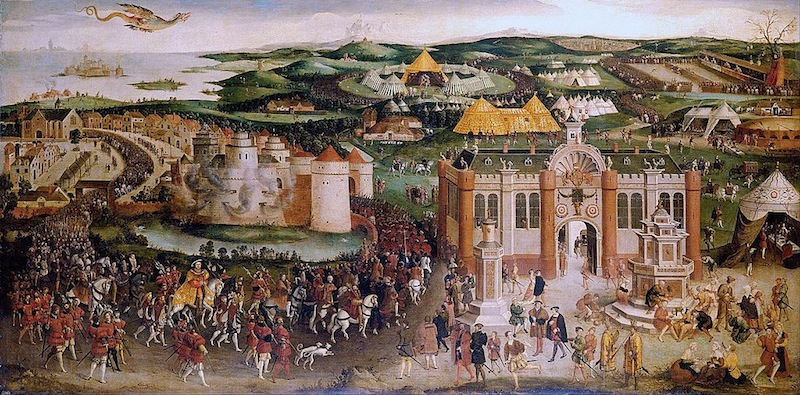
(Image: The Field of Cloth of Gold - Credit: Royal Collection)
John Gater: “I would choose the site of Orkney, the whole island and all of the subsidiary islands beyond the mainland. I’d start in the west and work east, and I’d spend the rest of my life surveying sites there. I was fortunate enough to have been involved with surveying the Stones of Stenness, the Ring of Brodgar, around Maeshowe for an application for World Heritage status, which was achieved 10-15 years ago. I think if we kept surveying the rest of the island, the whole island would become a World Heritage Site. The best thing was a farmer who reopened a hole in a mound on his land, and found 39 steps going into the earth, now known as Maeshowe. Nobody knew what to do with it and we were called up to do a survey, and we went there and we got these amazing results of this huge ring ditch surrounding these steps going in. To find that was stunning and we celebrated with a bottle of Highland Park!”
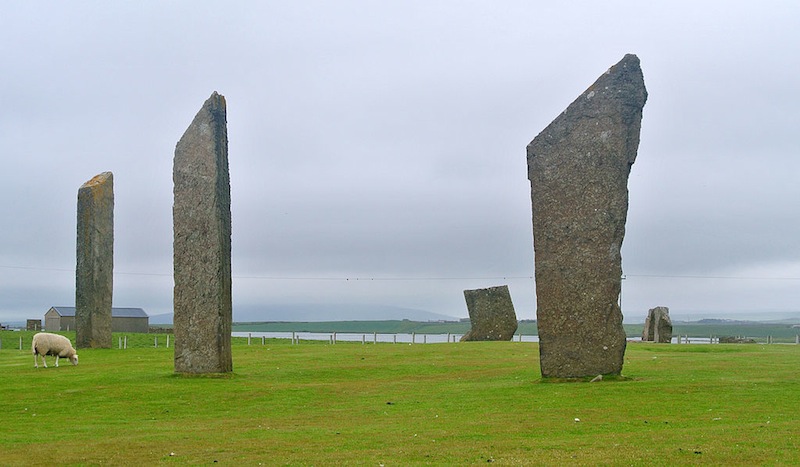
(Image: The Standing Stones of Stenness, Orkney - Credit: Wilson44691 CC0 1.0)
Carenza Lewis: “I published a paper a few years ago about the impact of the Black Death based on 2,500 test pits we had dug... a technique we used on the dig in Great Easton, Leicester as part of ‘the Big Dig’ in 2003; and the data from these thousands of test pits had enabled us to measure the impact of the Black Death. Off the back of that publication, I was then involved with something with people working across the world, and Monica Green in America, Arizona, was suggesting a similar technique could be used in Africa. She had identified two areas of Africa where there was records of deserted settlements some suggestion they might be associated with the Black Death or that period, but certainly there was a desertion occurring at that time, in West Africa and around the Great Lakes. So, if all practicalities were left to one side to do some excavation, some of those villages would be amazing because they have just never been looked at, at all. And even if it was nothing to do with the Black Death I think it would tell a completely new story about an historical period that we know nothing about from the archaeological perspective.”
Helen Geake: “If practicalities were no issues, I would like to shovel off most of the cliffs of Norfolk, to have a look at Haisborough on a flat landscape level – so the site that doubled the antiquity of humans in North-Western Europe. We can only see as it erodes out of the cliff, and it’s incredibly dangerous to try and tunnel into the cliff, so just blitz it all off with the biggest digger, the most impossibly big digger, take the whole thing off and do it as an un-stratified site almost, see the whole thing in plan. That’s what I’d like to do. That’s about 700,000 to 800,000 years ago and the flints that come out of the cliff are black as night; they are fresh and perfect – they have obviously not been trundled about in the plough soil in the same way that glacial flints have been. So, it has not been affected by the Ice Age, as it is that deep. We can find out so much about how humans began to cope with cold climates, and a situation that they had not evolved to deal with. I think that that is such an exciting moment – when humans became humans.”
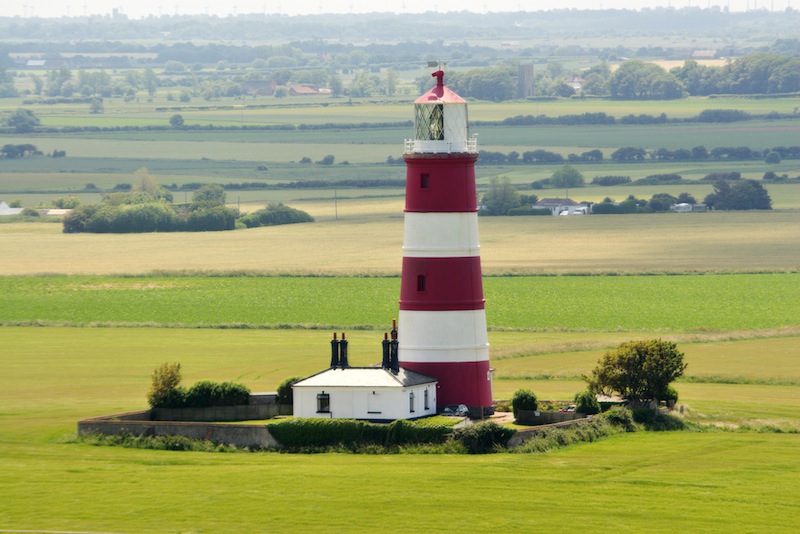
(Image: Happisburgh Lighthouse, near Haisborough Sands, Norfolk - Credit: Matthew Field CC-BY-SA 3.0)
Jim Mower: “I think it would probably have to be Tikal in Guatemala – a wonderful Mayan site that I visited at the beginning of my career and I’ve never forgotten it. I stayed overnight on the site, which you are not supposed to do, with a bunch of my friends, and came face to face with a jaguar and some guys with shotguns and it was very exciting! I’d love to go back.”

(Image: Tikal, Guatemala - Credit: Yogi CC-BY-SA 2.0)
Dani Wootton: “Off the top of my head, there is a site up in Lancashire – Rivington – and I know it is not as exotic, but it’s one place, because that’s where I’m from. So Lord Lever used to live around there and he built these amazing gardens, near Rivington Pike, that have been completely all grown over. It’s quite a modern one but it has all of these terraced gardens and I’d love to do some geophysics and actually do a landscape survey of them and get the community involved. It might be fairly modern but it’s an interesting bit of Lancashire’s history that has kind of been forgotten.”